

Client: AstraZeneca
How we used strategic UX to turn AstraZeneca’s Sustainability page into a high-performing hub
5,450+
clicks
52% CTR
on target queries
65
query variations dominating
The Challenge
AstraZeneca's sustainability content faced a strategic challenge common to large corporations: they had excellent sustainability initiatives, comprehensive sustainability reports, and genuine environmental commitments, but the content was scattered, the user experience was unclear, and their Sustainability page wasn't functioning as the authority hub it needed to be.
However, generic sustainability keywords ("sustainability," "corporate sustainability," "ESG") are dominated by sustainability-focused organisations and NGOs. For a pharmaceutical company to rank for broad sustainability terms would require competing against organisations whose entire mission centres on these topics.
So, instead we looked at the content journeys of people potentially searching for branded terms:
ESG investors evaluating AstraZeneca's commitments
Potential employees researching company values
Media and analysts covering pharmaceutical sustainability
Academic researchers investigating corporate environmental initiatives
NGO partners exploring collaboration opportunities
The brief wasn't traditional keyword optimisation. It was to design a sustainability hub that owns branded search completely, satisfies diverse user intents efficiently, distributes authority to important sub-pages, and creates an on-page experience that keeps stakeholders engaged.
How we addressed it
Research: Understanding what audiences really need
We began by analysing search behaviour around AstraZeneca's sustainability content to understand what people were looking for and whether they were finding it. Search intent analysis revealed clear patterns:
1. Report seekers (most common intent):
These users knew exactly what they wanted. It was the annual sustainability report PDF. They needed the fastest possible path to download it.
2. Initiative researchers (exploration intent):
These users wanted to understand AstraZeneca's specific commitments and programmes, not just download a report.
3. Comparative evaluators (assessment intent):
These users (likely investors or analysts) were comparing AstraZeneca's sustainability positioning against competitors or ESG frameworks.
4. Ethical/values researchers (values alignment):
These users (potential employees, academic researchers, advocacy groups) were investigating AstraZeneca's approach to ethical challenges.
The strategic insight: A single page needed to serve all four intent types efficiently. That required thoughtful UX design, not just keyword optimisation.
Competitive benchmarking: How other pharmaceutical companies approached sustainability hubs
Most pharmaceutical company sustainability pages fell into predictable patterns:
Report-focused landing page
Text-heavy narrative
Generic corporate messaging
None effectively balanced immediate report access for those who need it, exploration pathways for those researching initiatives, at-a-glance credibility for quick evaluators, and engagement for those seeking values alignment.
Strategic approach: Hub UX design
Think of the page as an airport hub. Different passengers have different destinations:
Some know exactly where they're going (report downloaders)
Some need to explore options (initiative researchers)
Some need quick information before deciding (evaluators)
Some are browsing possibilities (values researchers)
The page needed to serve all efficiently without forcing everyone through the same journey.
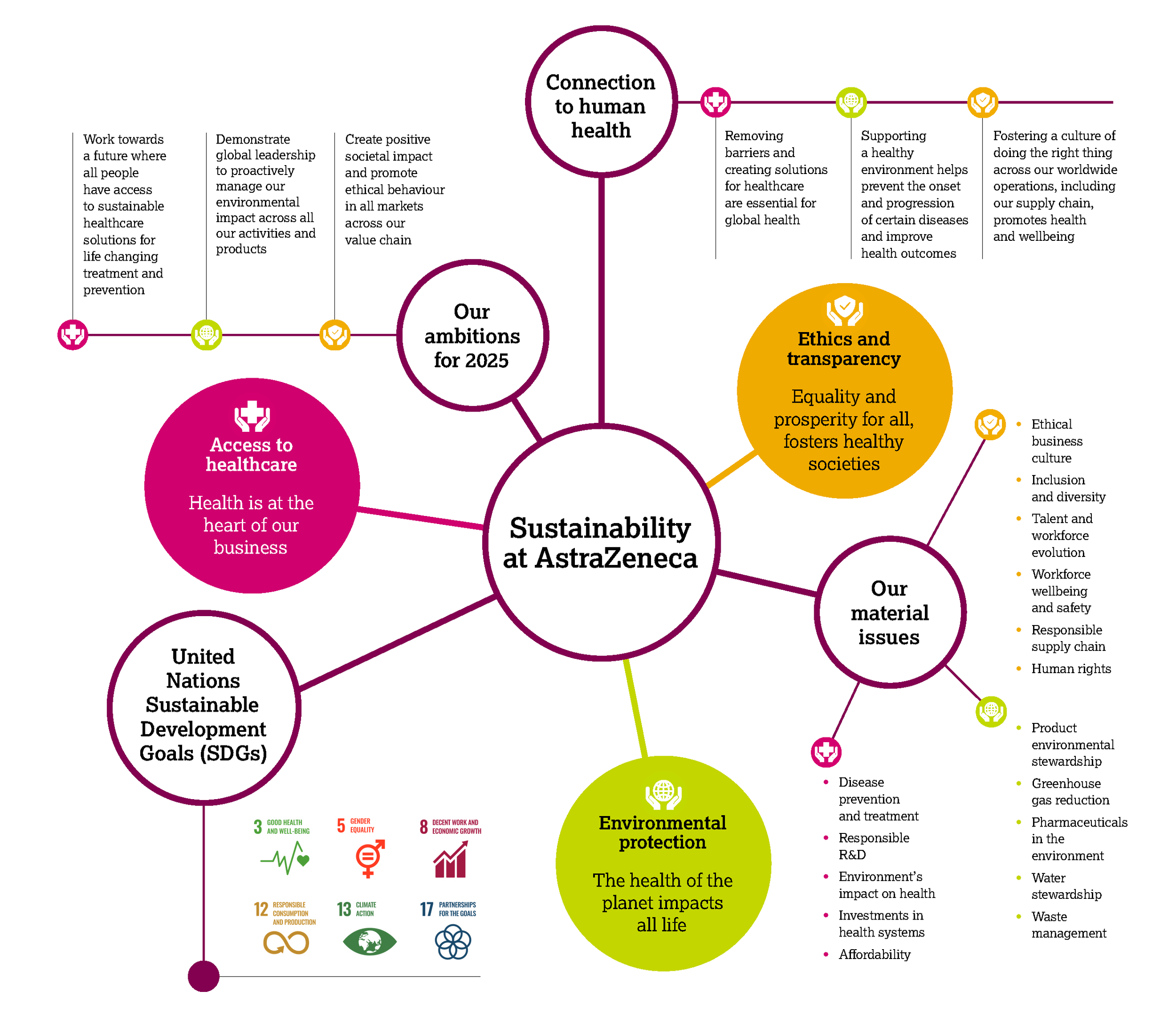
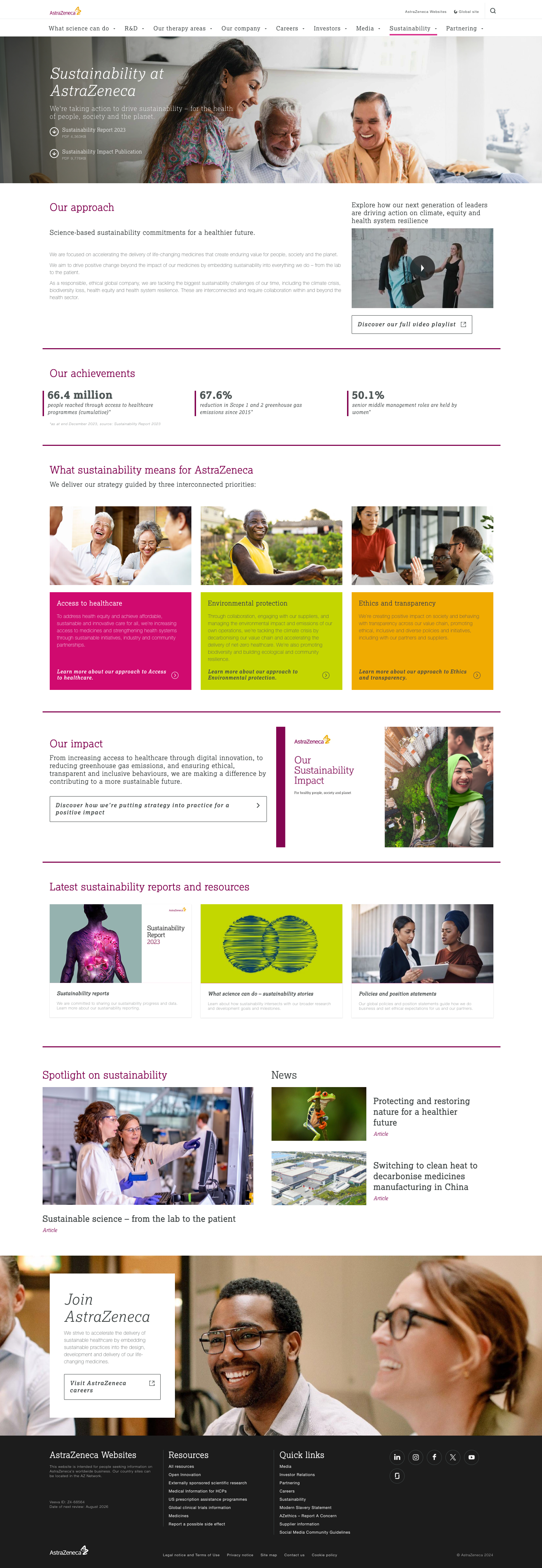
The wireframing process:
We worked with AstraZeneca's team through multiple iterations, wireframing different approaches and testing against user intent patterns.
We developed a layered hub architecture that combined elements strategically:
Hero section with a values-driven opening and two prominent CTAs
Immediate achievements section with three key statistics with visual treatment providing at-a-glance credibility.
Three-pillar navigation with visual cards for core focus areas. Each card provides brief context with "Learn more" pathway to detailed sub-pages.
Supporting content sections such as "Our approach" (values narrative), "Our impact" (detailed initiatives with link to impact report), "Latest sustainability reports and resources" (comprehensive report access), and News feed (recent developments)
This architecture meant:
Report seekers find download immediately (hero CTA)
Initiative explorers have clear three-pillar navigation
Quick evaluators see achievements instantly
Values researchers engage with narrative sections
Everyone finds relevant pathways without friction
The results:
5,411 total clicks. 307,347 impressions. 52.2% CTR on primary branded query (1,509 clicks). 94.8% of all traffic from position 1 rankings. 65 branded sustainability query variations. 5.7-position improvement and CTR more than doubled. 450+ clicks funnelled to sustainability reports.
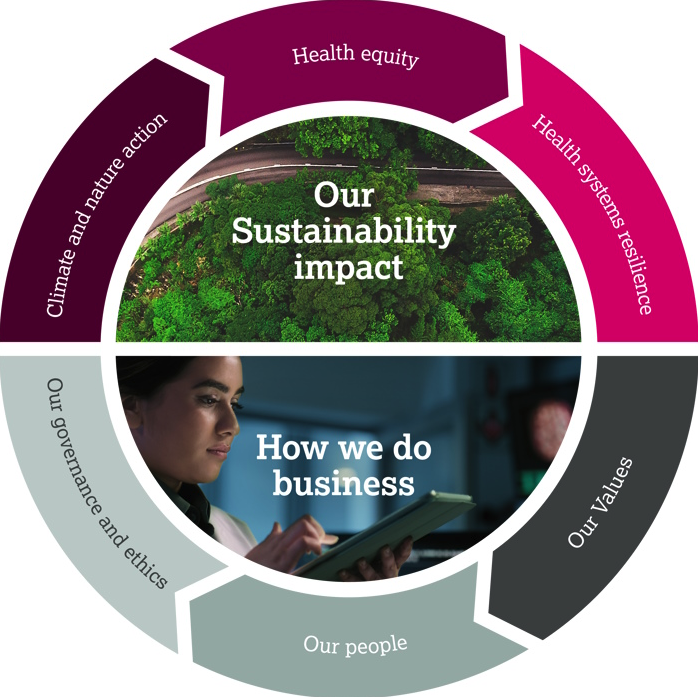
Complete content journey ownership
65 total branded sustainability query variations emerged, demonstrating comprehensive capture of how different stakeholders search for AstraZeneca's sustainability positioning.
Users found the hub page, which then efficiently directed them to the specific report they needed. The hub functioned as intended, serving as the central access point for all sustainability content.
Strategic significance
Why hub architecture matters for corporate content
This case study demonstrates a different approach to corporate mission-orientated content; one that prioritises user experience and authority distribution over generic keyword rankings.
1. Hub strategy enables authority consolidation
Rather than scattering sustainability content across disconnected pages, the hub model consolidates all sustainability search authority in one place, distributes that authority strategically to sub-pages (reports, initiatives), and creates clear pathways for users and search engines.
2. UX design directly impacts SEO performance
When users quickly find what they need, dwell time improves (positive engagement signal), return visits increase (page becomes trusted resource), and Google recognises quality and reinforces rankings
The wireframing process wasn't just design; it was SEO strategy. By structuring the page to serve multiple intents efficiently, we improved the engagement signals that algorithms reward.
3. Authority distribution serves business goals beyond clicks
The hub doesn't just generate its own traffic, it makes other content discoverable. Initiative pages (healthcare access, environmental protection) gain authority. News and articles reach audiences through featured content sections. Partnership opportunities become discoverable through clear navigation, and the latest Sustainability reports are easily navigable – overcoming an issue where Google had previously showcased the previous year’s report prominently in the SERP.
Conclusion
The sustainability hub demonstrates that corporate content success often comes from strategic UX design rather than traditional keyword optimisation.
The hub successfully serves diverse stakeholder needs, and the wireframing process created architecture that satisfies multiple intents efficiently, validated by CTR improvement from 1.95% to 3.74%.
The hub doesn't just rank. It consolidates authority, distributes it strategically to sub-pages, and creates clear pathways for stakeholders seeking AstraZeneca's sustainability perspective. It’s UX-driven SEO.
Looking for a touch of visibility?
If your organisation has important content scattered across disconnected pages and you need to build search authority, we'd love to discuss UX-first SEO strategy.
Let’s talk.
hello@wearebottle.com