
Client: AstraZeneca
How we helped AstraZeneca executives dominate search through strategic entity optimisation
2,660+
av. clicks on leadership pages
position 1.1
for key executive queries
34% CTR
on target keywords
The Challenge
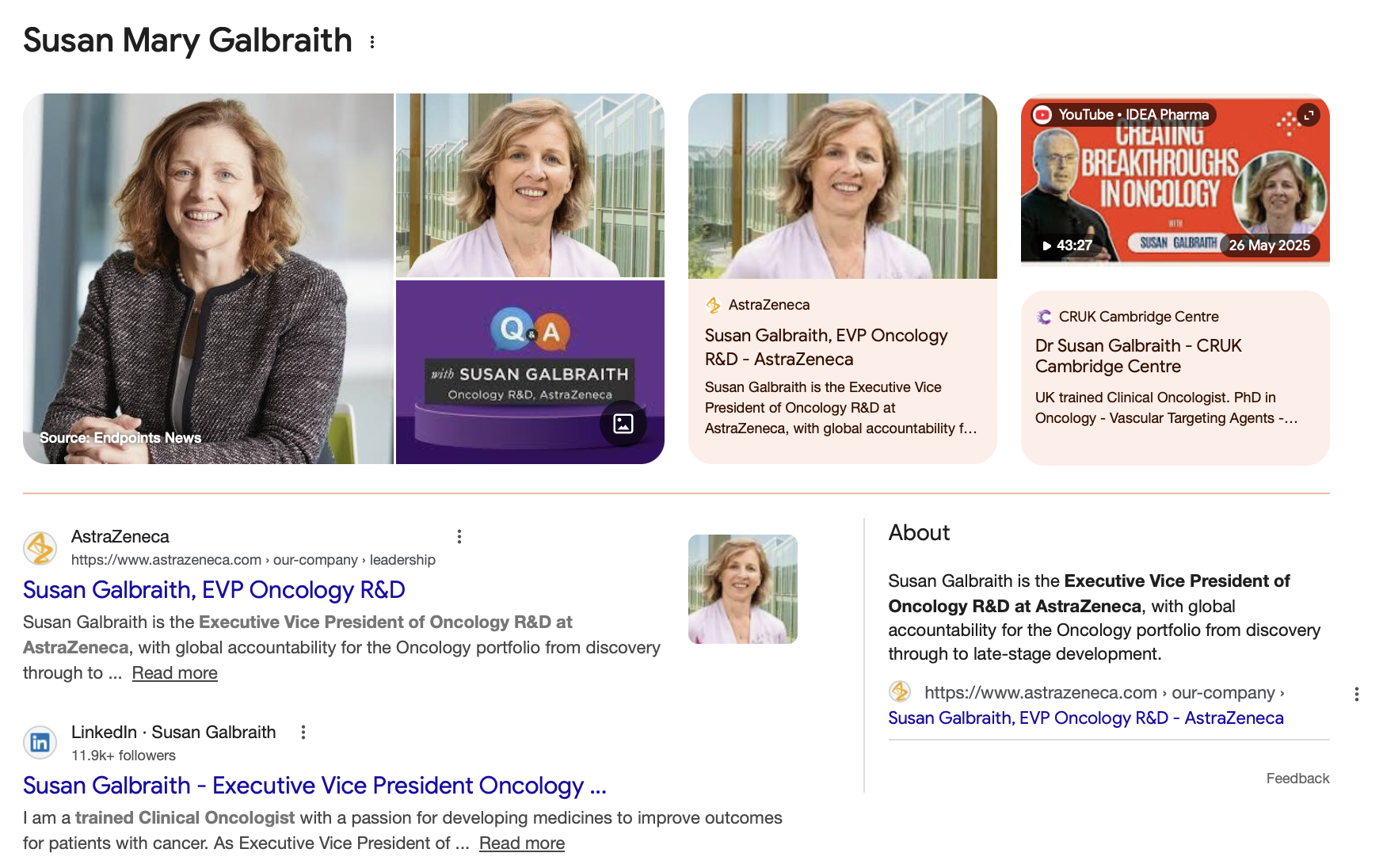
AstraZeneca faced a visibility problem that many pharmaceutical companies overlook: their executives were barely findable online. When someone searched for their Executive Vice President of Oncology R&D, for instance, they'd find scattered third-party profiles, LinkedIn results, and generic directories.
But AstraZeneca's own leadership page? Buried on page 2 or 3.
This isn’t a vanity metric problem. We know trust, authority, and scientific credibility drive business decisions, so having key executives invisible in search meant:
Weakened thought leadership positioning
Diminished investor confidence (inability to easily verify executive expertise)
The pharmaceutical sector is unique. When someone searches for an executive name, they're often looking for:
Academic credentials and research background
Publications and clinical trial involvement
Awards and fellowships demonstrating peer recognition
Company association and role verification
Speaking engagements and thought leadership
Generic corporate bio pages don't capture these searches, meaning LinkedIn profiles rank higher. Wikipedia entries (when they exist) tend to outperform company pages. And with Google's increasing focus on entity recognition and knowledge graphs, companies that don't optimise for this are missing out.
The brief: help AstraZeneca's key executives establish dominant search visibility, outrank third-party profiles, and leverage entity recognition to build long-term authority.
How we addressed it
Research: Understanding entity recognition and competitive landscapes
We knew this wasn't a typical SEO project. Entity optimisation requires understanding how Google recognises people as distinct entities, associates them with organisations, and surfaces them in knowledge graphs, AI Overviews, and voice search results.
Competitive benchmarking revealed the gap: We analysed how executives at competitor pharmaceutical companies appeared in search:
Most pharma companies had basic leadership directory pages with minimal detail
LinkedIn profiles consistently ranked positions 2-3 for executive names
Wikipedia entries (where they existed) captured position 1
Company leadership pages rarely broke into top 5
Almost none had video content, comprehensive publications, or structured entity signals
SERP analysis showed the opportunity: For executive name queries, Google was displaying:
Featured snippets with biographical information
Knowledge panels for well-known executives
"People also search for" related executives
Company association in search snippets
Publications and awards in rich results
Entity recognition research identified critical factors: We studied how Google's algorithms recognise and rank people entities:
Structured biographical data (education, career history, roles)
Authority signals (awards, fellowships, board positions)
Publications and citations (academic credibility)
Media mentions and external validation
Visual identity (consistent professional imagery)
Company association (clear organizational connection)
Unique identifiers (distinguishing from others with same name)
The push and pull: Navigating corporate disclosure
One significant challenge: pharmaceutical companies are understandably cautious about executive information disclosure. There's a balance between:
Providing enough detail to establish authority and entity recognition
Maintaining privacy around personal information
Meeting regulatory requirements around executive communications
Protecting competitive intelligence about leadership moves
We worked closely with AstraZeneca's communications team through multiple rounds of negotiation:
Our initial recommendations featured too much information: Our first recommendations included comprehensive career histories, all publications, detailed award descriptions, and personal background. Legal and communications teams flagged concerns.
Corporate pushback woudl give too little information: The scaled-back version was a basic bio, job title, and company boilerplate. We explained this wouldn't achieve entity recognition or competitive advantage.
Our final compromise was strategic disclosure: We identified the sweet spot:
Recent, relevant publications (demonstrating current expertise)
Prestigious awards and fellowships (peer recognition signals)
Education credentials (authority establishment)
Role and responsibilities (clear organizational context)
Key achievements (without competitive sensitivity)
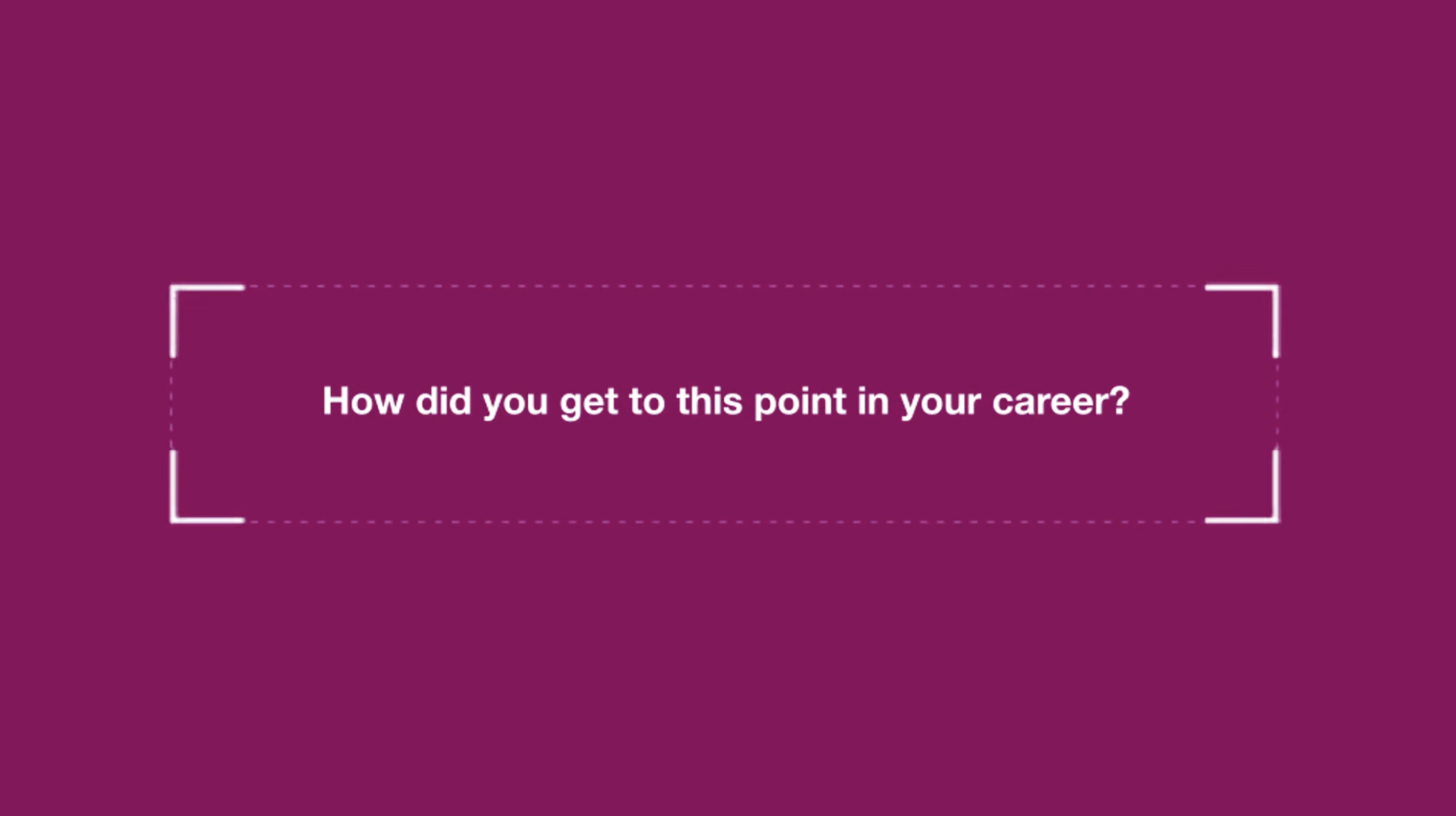
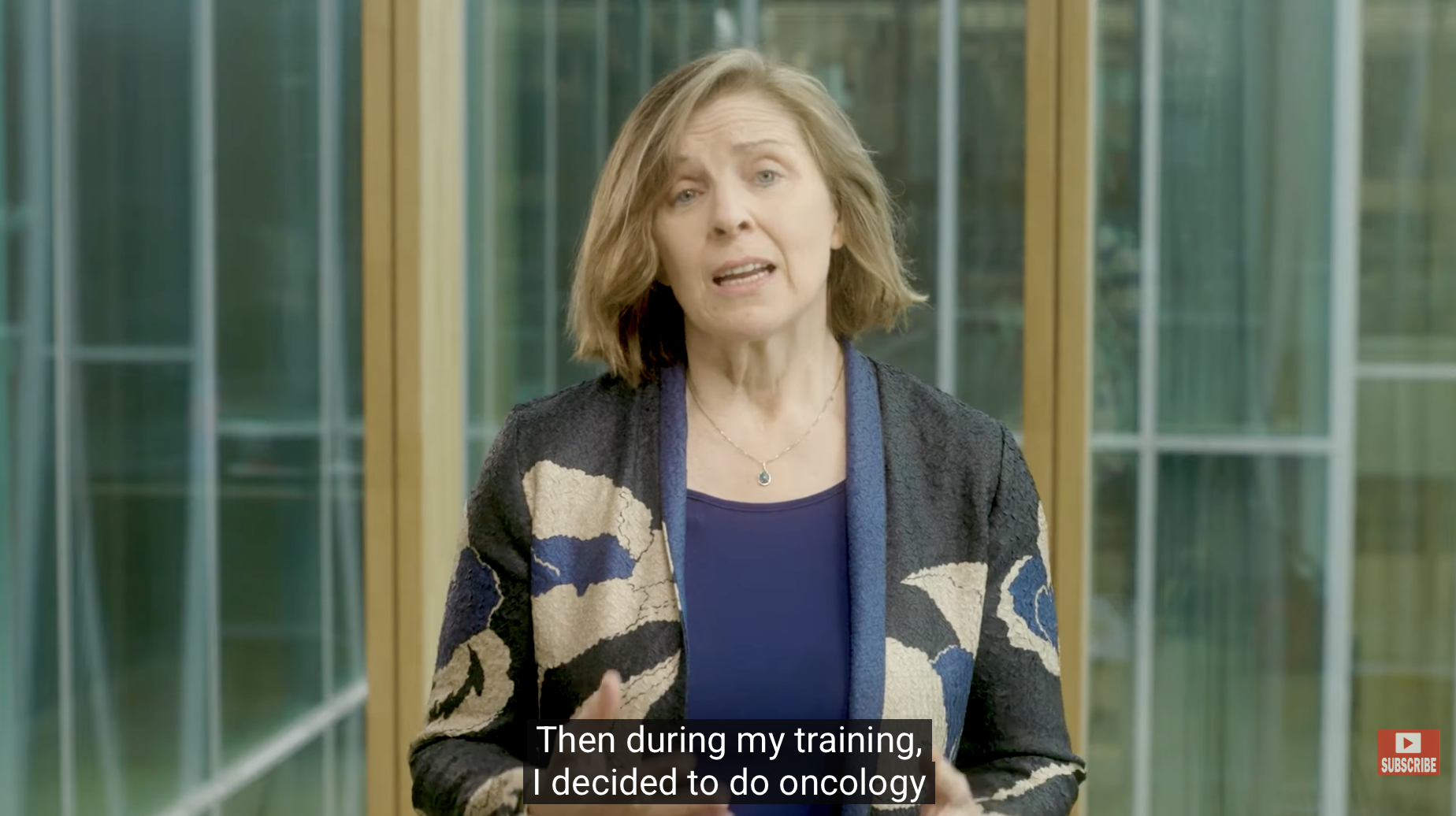
Professional video interview (authentic voice and visual identity)
This process took several weeks but was critical. The resulting content provided enough entity signals for Google whilst respecting corporate boundaries.
Content brief: Building entity recognition through strategic structure
We developed a comprehensive content brief that went far beyond typical biography guidelines. Every element served a purpose in entity recognition:
H1 and title tag strategy:
Format: "[Full Name]" as H1
Subtitle: "Executive Vice President, Oncology R&D, AstraZeneca"
Purpose: Clear entity name + role + organisation association
Opening paragraph architecture:
Full name (entity anchor)
Current role with full title
Company name (organizational entity link)
Primary responsibility or achievement
Geographic context (entity location signals)
Biographical sections
Education: Universities attended (entity associations with academic institutions)
Career milestones: Previous roles and organisations (career graph building)
Current role: Detailed responsibilities (expertise demonstration)
Research focus: Specific therapeutic areas (topical authority)
Authority signals:
Awards section: Fellowships, honors, recognition with years
Publications: Recent, relevant papers with co-authors and journals
Speaking engagements: Major conferences and thought leadership
Board positions: External appointments and advisory roles
Visual and media elements:
Professional headshot: High-quality, consistent across platforms
Video interview: Embedded, with title and description
Infographics: If relevant to achievements or research
Internal linking strategy:
Links TO: Oncology therapy area, R&D section, relevant WSCD articles
Links FROM: Company leadership page, therapy area pages
Related executives: "You may also like" suggestions
Publications: Links to full papers where available
Structured data recommendations: While we couldn't implement schema directly, we advised future markup:
Person schema elements (name, role, affiliation)
Organisation association (employee of AstraZeneca)
Award and honor listings
Publication citations

Implementation and the visibility breakthrough
AstraZeneca's team implemented the brief in November 2024. The page launched with:
Comprehensive biographical content
Five recent publications with full citations
Seven major awards and fellowships
Video interview with questions advised by Bottle
Professional photography
Clear internal linking to related content
Initial performance was modest, competing with LinkedIn and other third-party sources.
Then, in September 2025, something shifted.
The results:
2,667 av. clicks over 15 months 54,455 impressions Position 1.00-1.12 for primary name queries 754 clicks from "susan galbraith" at position 1.12 16-34% CTR on top branded queries 56 queries ranking positions 1-3 47% of traffic from top-3 positions 7-position average rank improvement during September 2025 algorithm updates
Immediate competitive displacement
The optimised leadership page design quickly began displacing third-party profiles:
Position 1.12 (AstraZeneca page)
754 clicks with 16.21% CTR
Outranking LinkedIn, Wikipedia, and other sources
"name + astrazeneca" query:
Position 1.00 (featured result)
454 clicks with 34.76% CTR
Dominant brand association established
Entity recognition achieved
The page design successfully triggered Google's entity recognition systems, evidenced by:
1. Position 1.00 rankings indicating knowledge panel triggers
When a page consistently ranks position 1.00 (rather than 1.2, 1.5, etc.), it often indicates Google is showing it as a featured entity result or knowledge panel source.
2. Name variant and misspelling capture
Google successfully associated multiple query variations with the same entity.
3. Company-person association established
Queries combining name + company achieved position 1.00 with exceptional CTRs:
"name + astrazeneca" - 34.76% CTR
"astrazeneca + name" - 60.00% CTR
4. Broader organisational queries captured
We saw general leadership searches surfacing:
"astrazeneca leadership" - position 9.75
"astrazeneca board of directors" - position 6.44
"astrazeneca leadership team" - position 2.64
This shows the page contributes to AstraZeneca's broader organisational entity graph.
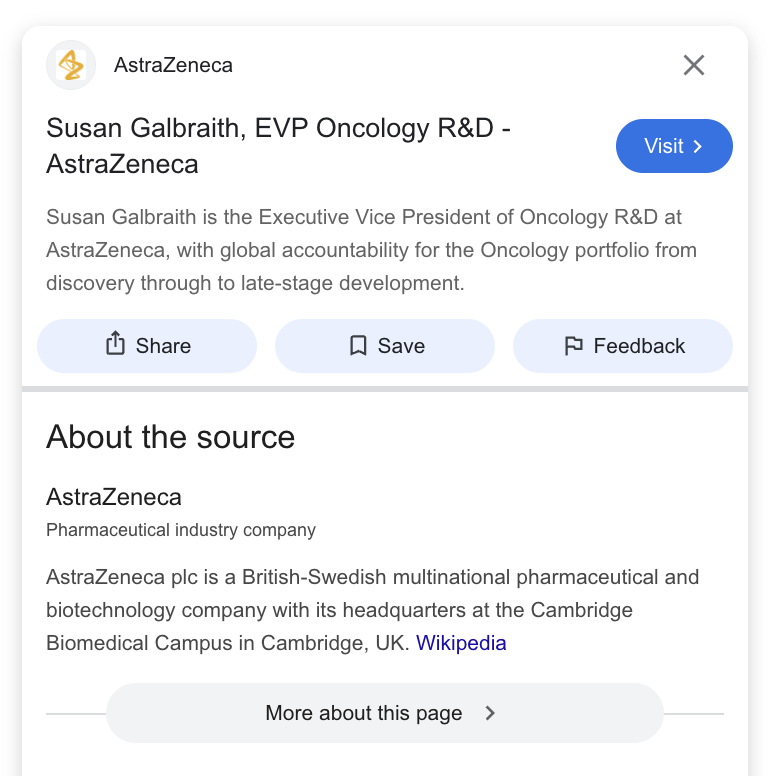
The September 2025 breakthrough
For the first 10 months (Nov 2024 - Aug 2025), performance was solid but not exceptional:
Average position of targets: 7-10
Monthly clicks: 113-188 range
Competing with LinkedIn and third-party sources
Then in September 2025, dramatic improvement:
Average position of targets: 1-3 (7-position improvement)
Monthly clicks: 168-211 range
Google's algorithm updates in mid-2025 appear to have enhanced entity recognition systems. Pages with strong E-E-A-T signals (such as awards, publications, professional credentials) received significant boosts. The investment in comprehensive biographical content, structured authority signals, and internal linking paid off.
Comprehensive query coverage
The page design captures around 150 different queries, demonstrating breadth of visibility. The use cases include direct name lookup, company verification, professional title verification, reference checking, and other general information seeking. Position distribution also showed decisive dominance.
56 queries in positions 1-3 → 1,252 clicks (47% of total)
45 queries in positions 4-10 → 33 clicks (1% of total)
48 queries in positions 11+ → 0 clicks (0% of total)
Performance sustainability
The optimised page design maintained strong performance through multiple algorithm updates:
Navigated September 2025 entity recognition improvements
Continued capturing new query variations
Maintained high CTRs indicating user satisfaction
Monthly performance (recent period):
September 2025: 206 clicks, position 6.72
October 2025: 211 clicks, position 5.25 (peak)
November 2025: 168 clicks, position 5.28
The slight click decrease in November (despite maintaining position) reflects seasonal patterns.
Strategic significance
Why entity optimisation matters for B2B brands
This case study demonstrates a strategic approach that most B2B companies - especially in technical, regulated industries like pharmaceuticals - often overlook.
1. Entity recognition is vital SEO - and future proofing for AI search
Traditional SEO focused on keywords and links. Modern search - especially with AI Overviews, voice assistants, and knowledge graphs - focuses on entities: distinct people, organisations, concepts that Google can understand, connect, and surface contextually.
When someone asks "Who leads oncology research at AstraZeneca?" or "Tell me about Susan Galbraith's background," AI systems don't search keywords, they query entity graphs. Companies without optimised entity signals are losing out in these systems.
As AI Overviews, ChatGPT, Perplexity, and voice assistants increasingly answer queries directly, they pull from authoritative entity sources. Companies without entity optimization won't be cited. Their executives won't appear in AI-generated answers. They'll be invisible in the next generation of search.
2. Executive visibility drives organisational authority
AstraZeneca benefits from individual entity search visibility in multiple ways:
Journalists researching stories can quickly verify credentials, find recent publications, and contact information. This increases media mention likelihood.
Analysts and investors researching leadership expertise find comprehensive, authoritative information demonstrating depth of talent.
Top scientists considering AstraZeneca can easily verify the calibre of leadership, seeing awards, publications, and research focus.
Potential collaborators researching AstraZeneca's capabilities see the depth of expertise through leadership profiles.
When executives speak at conferences or publishes research, search visibility amplifies that authority.
3. Scalable across leadership teams
We proved the model. It’s replicable across
C-suite executives
Therapy area leads
Research directors
Regional presidents
Board members
Each optimised profile strengthens the organisational entity graph, creates internal linking opportunities, and builds comprehensive thought leadership visibility.
Broader implications for technical B2B SEO
Entity optimisation isn't just for executives
The same principles apply to:
Scientific researchers: Publications, citations, research areas
Product innovators: Patents, awards, product development
Technical experts: Certifications, speaking, industry contributions
Any individual representing organisational expertise benefits from entity optimisation.
The push-pull process is universal
Every company faces the same balance:
How much executive information to disclose
Balancing transparency with privacy
Meeting regulatory requirements
Protecting competitive intelligence
The negotiation process we navigated with AstraZeneca is replicable. The key is demonstrating the strategic value: entity recognition isn't vanity, it's business advantage.
Small investment, sustained returns
Creating an optimised leadership page requires:
Strategic research
Content development
Visual assets
Internal linking
But once established, the page delivers ongoing visibility with minimal maintenance. Monthly updates to publications or awards keep entity signals fresh.
Conclusion
Many agencies can write a biography. Few understand how Google's entity recognition systems work, which signals trigger knowledge graph inclusion, how to structure content for voice search and AI Overviews, and the internal linking architecture that builds entity authority.
Working with AstraZeneca required understanding industry regulatory constraints, corporate communications approval processes and legal review requirements, as well as privacy and disclosure boundaries. We guided the push-pull process to achieve optimal results within real-world constraints.
When we optimised this page design, we weren't just thinking about current Google rankings. We were preparing for next-generation entity recognition. The September 2025 algorithm improvements validated that approach: the page was already optimised for the new system.
The results: 2,660+ av clicks, 54,450+ av. impressions, position 1.00-1.12 for primary queries, and successful navigation of the September 2025 algorithm breakthrough that rewarded authoritative entity signals.
But beyond the metrics, this demonstrates a strategic principle: in technical B2B industries, your executives are your most valuable content assets. Their expertise, credentials, publications, and thought leadership represent organisational authority. Making them findable is a competitive advantage that compounds over time.
Looking for a touch of authority?
If your company operates in a technical, fast-moving field and you're ready to establish genuine thought leadership (not just "rank higher"), we'd love to discuss how Bottle can help.
Let’s talk.
hello@wearebottle.com